
Beef. Direct.
Nutrient dense - Hormone Free - No Antibiotics
Real Beef

Understanding Value
Value is ultimately calculated and decided by the end consumer and so we'll leave the final decision in your hands but allow us to make our case...
Although we could bore you with details on details, why don't we make 3 simple points for you.
1.) Water Weight
This is probably the biggest scam going on grocery store meat. For one, most any meat even when aged is "wet aged" to ensure no weight is lost. Weight is the name of the game when it comes to profits. There is zero incentive to get rid of any weight. Your average piece of red meat at the prior to any dry aging will be at about 70-75% water, whereas dry aged red meat will sit at about 60-65%. Legally they can actually add up to 12% injected water without needing to list this on ingredients, so you can have about a 20-25% weight difference from buying grocery store red meat to a premium dry aged product direct from your local rancher. Ever wonder why your burger patty seems to shrink to about half the size after you're done cooking it? That's why! How would you feel if you actually saw how much water you were paying $X/pound for? $10/pound could actually be more like $13/pound or your $30/pound ribeye might actually be more like $39/pound by comparison.
2.) The Middle Man
The modern supermarket has changed the face of our food supply chain, and let's face it, a lot of it is wonderful. We have access to so many good and nutritous foods that we could never have dreamt about 100 years ago. But with that also comes a pretty gigantic web of infrastructure with many middle men all needing their mark up to cover their costs. This isn't evil, this is just how the world works. But there are times where we can say that it might not be necessary. Think about it. We have smaller family farms disappearing in Canada at a rate of about 1000 farms per year, because they can't make ends meet. They ship their livestock off to maybe Alberta, maybe Ontario, where they can enter the feedlot and then the giant food supply chain only to eventually end up back in Manitoba where the consumer will pay for the finished product. Probably the two biggest losers in this scenario are the rancher who originally produced the product and the end consumer. And all the while, these two were likely within 100km of each other! What if the rancher could sell his product to the consumer directly? They could both split some of the savings, so not only is the consumer getting a deal on their meat but the rancher is able to keep their legacy alive by helping out their margins at the same time. Win-win! So while you the consumer knows EXACTLY where your beef came from, you can also feel great knowing that you're playing an essential role in keeping a family farm in business that is so essential to our local food supply chain.
3.)Buying Bulk
It's no secret. Buy bulk = savings. We are ranchers, we aren't a grocery store. So the only way we can really do this is through bulk sales. We can't employ staff to sit behind a counter that showcases individual cuts, otherwise we are basically replicating a system that we're trying to avoid in the first place. That basically slowly adds the cost of a "middle man" back into the equation. For the time being, the best way we can see selling our beef is by the 1/4, 1/2 or whole. When we say a 1/4 this means you get an equal 1/4 of all the cuts of one animal. We will also be offering bulk ground beef and we may offer some specials from time to time, but the name of the game is bulk value!
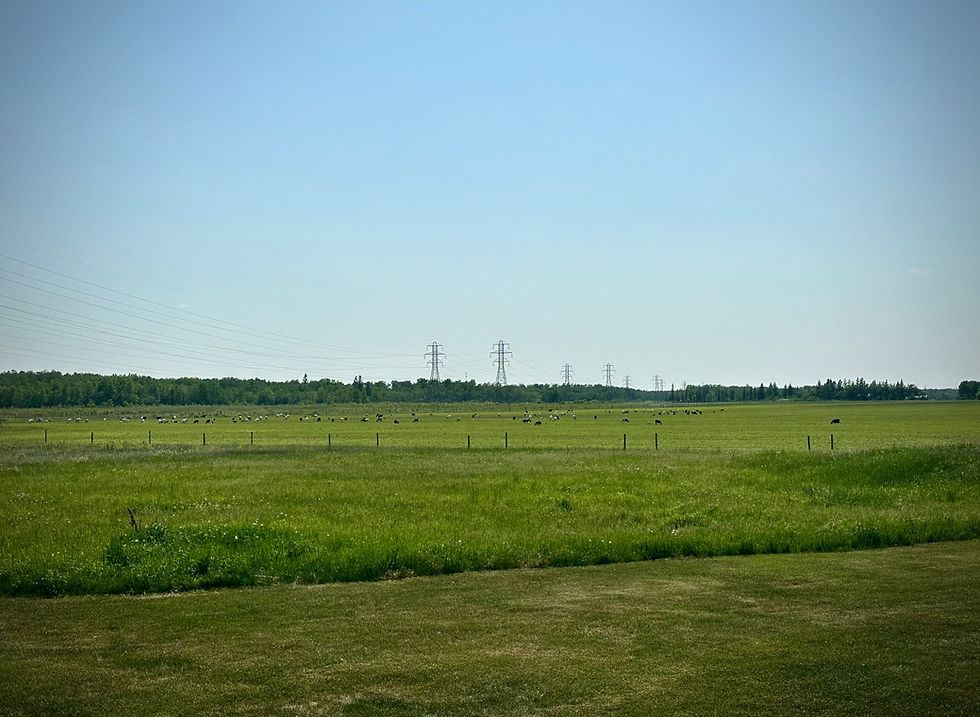
Finding Your Way to Taiga Farms
Located just 20 minutes east of Winnipeg near the town of Anola